
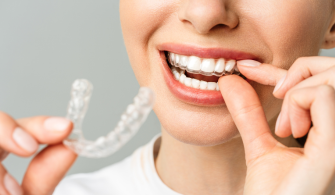
For individuals in Kochi considering orthodontic treatment, clear aligners offer a modern alternative to traditional fixed metal brackets. However, aligner therapy is far more than just a cosmetic trend—it is a sophisticated biomechanical system that relies on biological tissue response, precise diagnostic planning, and consistent patient compliance.
Whether you are exploring options for mild crowding, spacing, or bite alignment, understanding how clear aligners work behind the scenes allows you to make informed decisions alongside your dental practitioner. This comprehensive guide outlines the science of clear aligner movement, diagnostic protocols, daily care mechanics, and what to expect during treatment at Smiligne Dental, Skin & Wellness Clinic in Palarivattom, Kochi.
The Biomechanics of Aligner Therapy: How Plastic Trays Shift Teeth
Teeth do not move simply because plastic pushes against them; they move because the surrounding living bone and ligament tissues adapt to light, continuous force.
When a clear aligner tray is placed over the teeth, it fits slightly differently from the current position of your dental arch. This slight differential exerts targeted pressure on specific teeth, transferring force into the periodontal ligament (PDL)—the connective tissue matrix that anchors the tooth root to the jawbone.
- The Pressure Zone: On the side of the root where pressure is applied, the blood vessels in the periodontal ligament compress. This signals specialized cells called osteoclasts to break down and resorb small amounts of bone tissue, creating space for the root to move.
- The Tension Zone: On the opposite side, where the ligament is pulled, tension stimulates osteoblasts to deposit new bone matrix, stabilizing the root in its updated position.
Because this cellular remodeling takes time, clear aligner systems use a series of progressive trays. Each tray makes incremental adjustments, allowing the supporting tissues to remodel gradually as the tooth changes position.
Why Comprehensive Diagnosis Precedes Tray Fabrication
A successful aligner outcome depends heavily on what happens before the first tray is manufactured. Simply taking an impression or digital scan is not enough to begin treatment. A thorough orthodontic evaluation assesses multiple anatomical factors:
- Periodontal and Gum Health: Existing gum disease, active decay, or other oral-health problems generally need to be assessed and managed before orthodontic tooth movement begins.
- Root Structure and Bone Density: Dental X-rays, such as Orthopantomograms (OPGs), are evaluated to confirm root length, bone support, and the presence of impacted teeth or anatomical obstacles.
- Bite and Jaw Joint Function: Bite relationships and, where clinically relevant, jaw-joint symptoms may also be considered as part of treatment planning.
At Smiligne in Palarivattom, Kochi, lead orthodontist Dr. Saranya Jay performs comprehensive diagnostic evaluations to determine whether clear aligner therapy is clinically appropriate for each patient’s unique anatomy.
The Role of Attachments and Space Creation
Many patients expect clear aligners to consist solely of smooth plastic trays. However, because plastic is naturally slick, smooth aligners cannot easily grip flat tooth surfaces to execute complex movements like rotations or root tilting.
To overcome this, tooth-colored composite resin shapes called attachments are frequently bonded to specific teeth during initial fitting:
- Creating Leverage Points: Attachments act as custom handles on the tooth surface, allowing the aligner tray to push from specific angles.
- Enabling Complex Movements: Attachments are essential for rotating rounded teeth (such as premolars), intruding or extruding teeth, and maintaining root control during crown movement.
In some cases where teeth are tightly crowded, a practitioner may also perform Interproximal Reduction (IPR). IPR involves carefully removing a very small amount of enamel between selected teeth to create additional space when the treatment plan requires it.
Daily Wear Mechanics: Why 20 to 22 Hours Matter Biologically
Clear aligners offer the convenience of removability, but this flexibility demands discipline. Practitioners universally recommend wearing aligner trays for 20 to 22 hours per day, removing them only for meals, non-water beverages, brushing, and flossing.
Consistent wear helps maintain the forces planned into each aligner and gives the teeth time to respond to that stage of treatment. Long or repeated periods without the trays can reduce effective wear time and may contribute to the teeth falling behind the planned sequence.
Understanding “Tracking” and the Purpose of Refinement Trays
In clear aligner therapy, tracking refers to how accurately your actual teeth follow the movement path planned by the digital software model.
Tracking can be affected by wear consistency, aligner fit, attachment performance, contact between neighbouring teeth, the type of movement being attempted, and individual biological response.
If a tooth stops tracking, a small gap appears between the tooth surface and the aligner tray. To correct this, orthodontists utilize refinement aligners. Refinements involve taking a new digital scan mid-treatment to manufacture a supplemental set of trays, helping bring actual tooth positions closer to the revised treatment goals.
Where Clear Aligners May Be Suitable and When Treatment Becomes More Complex
Clear aligners are highly versatile, but they are one of several orthodontic tools. Suitability depends on the nature of the tooth movement required:
- Situations That May Be Suitable for Aligners: Mild to moderate dental crowding, spacing gaps, arch expansion, and minor bite alignment issues.
- Situations That May Require More Complex Planning: Severe skeletal jaw misalignments, severely rotated teeth, impacted teeth, or large extraction gaps often require specialized mechanics, auxiliary appliances, or fixed braces.
| Clinical Scenario | Suitability Level | Orthodontic Mechanism & Expectations |
|---|---|---|
| Mild to Moderate Crowding | Highly Suitable | Incremental tray force application with composite attachments |
| Spacing Gaps & Arch Expansion | Suitable | Gradual arch widening and gap closure under continuous wear |
| Minor Bite Misalignments | Suitable | Targeted pressure points with diagnostic compliance monitoring |
| Severe Skeletal Misalignments | Complex / Specialist | May require auxiliary appliances, jaw surgery, or fixed braces |
| Severely Rotated / Impacted Teeth | <Complex / Specialist | Requires specialized mechanics, buttons, elastics, or fixed appliances |
An expert clinical evaluation determines whether aligners alone can achieve your goals or if alternative modalities are recommended.
Practical Everyday Aligner Care
Incorporating clear aligners into daily life in Kochi involves simple hygiene habits:
- Eating and Drinking: Always remove trays before eating or drinking hot, sugary, or colored liquids (such as tea, coffee, or juice) to prevent warping the plastic or trapping staining agents against enamel. Plain water is the only beverage suitable to drink while wearing trays.
- Cleaning Your Trays: Rinse aligners with cool or lukewarm water every time you take them out. Clean them daily using a soft toothbrush and mild soap or specialized cleaning tablets. Avoid hot water, which deforms the thermoplastic material.
- Handling Lost Trays: If an aligner is lost or damaged, contact your clinic immediately. Do not jump ahead several tray sets without clinical guidance, as forced movement can strain tooth roots.
Post-Treatment Retention: Protecting Your Alignment
Completing your active tray series is a major milestone, but treatment does not end there. retention is crucial to maintaining your new smile.
After orthodontic treatment, the tissues supporting the teeth continue adapting to their new positions, and teeth can also shift naturally throughout life. Retainers help limit this movement and preserve the treatment result.
Common Misconception: “Digital 3D Simulations Guarantee Final Results”
A widespread misconception among patients is that the digital 3D video shown during initial consultations is a guaranteed preview of the final result.
In reality, digital simulations are treatment planning tools, not promises. They illustrate how trays are engineered to apply force over time. The actual clinical outcome depends on biological response, bone density, attachment efficiency, and patient compliance. Professional clinical monitoring by an experienced orthodontist ensures that real-world movement is guided safely toward the planned objective.
Clinical Disclaimer
This article is for general educational information only and is not a substitute for professional clinical diagnosis or medical advice. A personalized orthodontic treatment plan requires an in-person consultation with a qualified dental professional.
Next Steps for Your Smile Journey in Kochi
If you are evaluating clear aligner treatment in Kochi, receiving a thorough clinical assessment is the first step toward understanding your options.
Contact Smiligne Dental, Skin & Wellness Clinic in Palarivattom to book a clear aligner consultation with Dr. Saranya Jay and our clinical team.
Frequently Asked Questions
How long does clear aligner treatment usually take?
Treatment duration varies based on individual case complexity, the distance teeth must travel, and daily wear compliance. Mild cases may take several months, while more complex alignments require longer timelines. Exact duration is estimated after diagnostic evaluation.
Are clear aligners pain-free or risk-free?
Temporary pressure or tenderness can occur during active treatment. While aligners are an established orthodontic option, all treatment carries potential biological risks. Clinical monitoring helps identify and manage potential issues throughout care.
Can I eat or drink while wearing clear aligners?
No. You must remove your aligners when eating foods or drinking anything other than plain water. Consuming hot liquids can distort the aligner tray, while sugary or dark drinks can stain the plastic and increase the risk of dental decay if trapped under the aligner.
What should I do if a tooth is not tracking with the aligner tray?
If you notice a visible space between your tooth and the aligner, continue wearing your current tray and notify your orthodontist. A progress check will determine whether additional wear time, attachment adjustment, or a refinement scan is needed.
Will I need to wear retainers forever after clear aligners?
Retainers are necessary after any orthodontic treatment to prevent teeth from drifting back toward their original positions. Your orthodontist will recommend a retention schedule based on your treatment and long-term needs.