
Jaw pain,clicking,or discomfort may seem minor at first,but these could be early signs of TMJ Disorders, a condition affecting the temporomandibular joint — the hinge connecting your jaw to your skull.This joint is essential for everyday activities like speaking, chewing, yawning, and even smiling.Ignoring early symptoms of TMJ Syndrome can lead to chronic pain, restricted jaw movement, misalignment, and long-term joint problems.
At Dr.Saranya Jay’s Smiligne Dental and Skin Clinic in Kochi, patients receive expert evaluation and non-invasive treatments to restore jaw function and relieve discomfort.Understanding the warning signs of TMJ problems is the first step toward maintaining a healthy jaw and facial function.
What is TMJ Disorder?
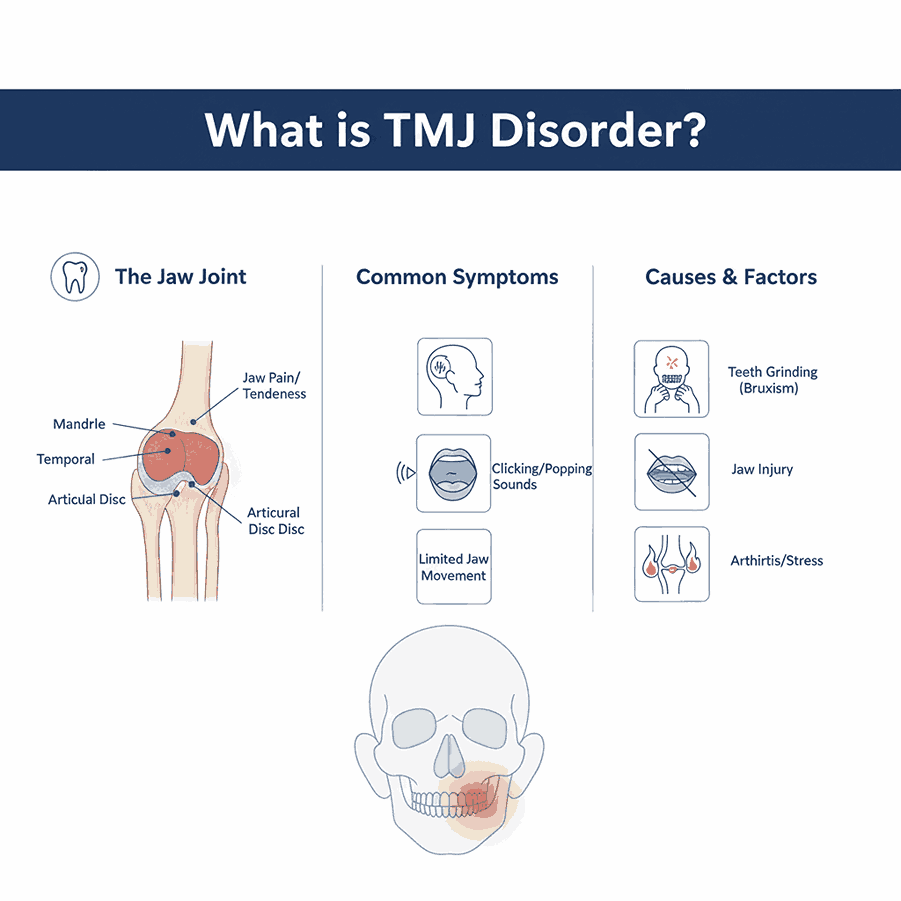
The temporomandibular joint(TMJ) is one of the most complex joints in the human body,allowing the lower jaw to move in multiple directions — up,down,side to side,and forward.When this joint or the surrounding muscles are affected,TMJ Disorder can develop.People with TMJ disorder may experience pain or tenderness in the jaw,stiffness or restricted movement,TMJ clicking sound or clicking sound in jaw, headaches, ear pain, and facial tension.
While occasional jaw discomfort can occur naturally,persistent pain or frequent clicking often indicates TMJ Syndrome.
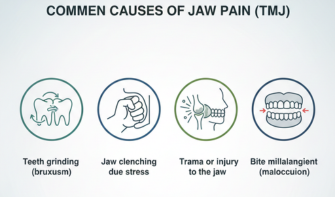
Common causes include:
- Teeth grinding (bruxism)
- Jaw clenching due to stress
- Arthritis in jaw
- Trauma or injury to the jaw
- Bite misalignment (malocclusion)
Early detection and treatment are essential to prevent long-term joint problems and maintain proper jaw function.
Common causes include:
Recognizing the early signs of TMJ disorder can help prevent complications.
1. TMJ Clicking Sound or Clicking Sound in Jaw: A TMJ clicking sound or clicking in the jaw is often the first symptom. Occasional clicks may be normal, but repeated clicking with discomfort suggests the joint is not working properly. Ignoring it can lead to TMJ dislocation symptoms, like jaw locking or slipping.
2. Jaw Pain: Pain in the jaw is one of the most common signs.It can be tenderness in the joint, soreness in the muscles, or discomfort that spreads to your ears, neck, or face. Some people feel lower jaw pain on the left side or left jaw bone pain, though pain can happen on both sides. It usually worsens with chewing, talking, or yawning.
3. Difficulty Moving the Jaw:If it is hard to open or close your mouth fully,it may be due to TMJ problems.Jaw stiffness or locking is a sign of TMJ dislocation symptoms and should be checked by a professional.
4. Headaches, Ear Pain, and Facial Tension: TMJ disorders can cause headaches,earaches, or tightness in the face.These symptoms are sometimes mistaken for sinus problems or migraine.Proper evaluation is essential for correct treatment.
5. Arthritis in Jaw:Over time,stress on the TMJ can cause arthritis in the jaw,leading to swelling, stiffness,and decreased jaw mobility.Early treatment can prevent permanent damage.
Causes of TMJ Disorder
Several factors can lead to TMJ disorders:
- Teeth Grinding (Bruxism): Excessive clenching strains the jaw joint and surrounding muscles.
- Stress: Emotional stress can cause unconscious jaw clenching.
- Jaw Injury: Trauma can damage the jaw joint or surrounding muscles.
- Arthritis: Joint degeneration, including arthritis in the jaw,reduces mobility.
- Bite Misalignment: Uneven bite forces place extra pressure on the TMJ.
Identifying the cause is essential for effective treatment.
How TMJ Disorder is Diagnosed
Diagnosis of TMJ disorder includes:
- Physical Examination: Checking for tenderness,swelling,jaw clicking,and limited movement.
- Imaging Tests: Comparing TMJ X-ray normal vs abnormal to detect structural changes,cartilage issues, or arthritis.
- Medical History: Assessing teeth grinding,jaw clenching,stress, or previous injuries.
Early diagnosis helps in planning effective,non-invasive treatment.
Treatment for TMJ
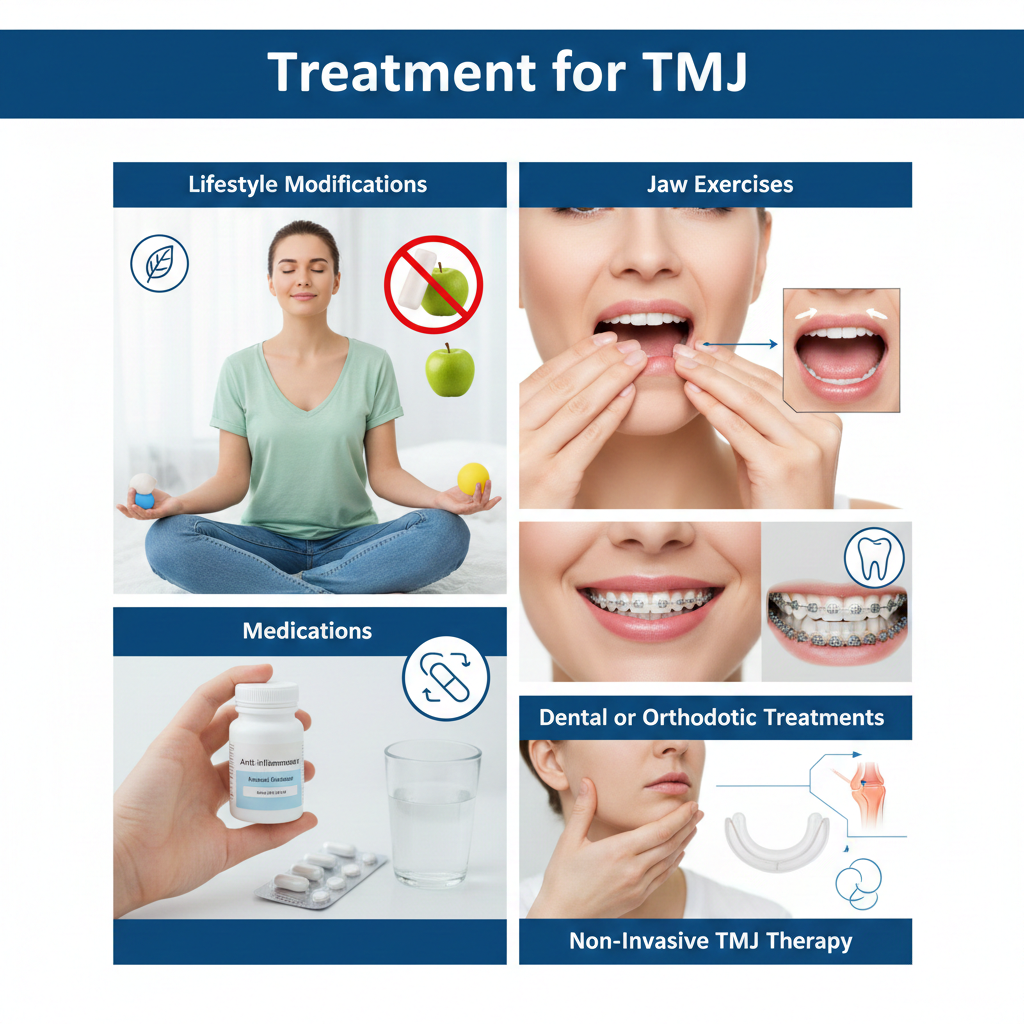
Treatment for TMJ disorder depends on severity and cause:
- Lifestyle Modifications: Reducing gum chewing,avoiding hard foods,and managing stress can relieve pressure on the joint.
- Jaw Exercises: Gentle stretches and relaxation exercises help reduce muscle tension and improve jaw movement.
- Medications: Anti-inflammatory drugs or muscle relaxants may be prescribed to reduce pain and swelling.
- Dental or Orthodontic Treatments: Correcting bite misalignment using braces or clear aligners reduces stress on the joint.
- Non-Invasive TMJ Therapy: Neuromuscular therapy,specialized devices,and physiotherapy restore joint function without surgery.
Why Choose Dr.Saranya Jay’s Smiligne?
At Dr.Saranya Jay’s Smiligne Dental and Skin Clinic in Kochi,patients receive expert care for TMJ Disorder,orthodontics,and overall facial wellness.With over 10 years of clinical experience, Dr.Saranya Jay combines advanced knowledge,precision,and a patient-focused approach to provide effective,non-invasive treatments for jaw pain, bite alignment, and TMJ Syndrome. Every treatment plan is tailored to the individual, ensuring comfort, long-term results, and a natural-looking smile.
Smiligne offers a comprehensive range of services,including clear aligner,advanced braces, TMJ and neuromuscular therapy,smile design, and non-surgical jaw corrections.With over 2,000 patients treated successfully and recognition as a Diamond Invisalign Provider, the clinic is trusted for delivering results that are both functional and aesthetically pleasing. Choosing Smiligne means choosing professional care, modern solutions, and a compassionate environment for your oral and facial health.
Conclusion
Even mild symptoms of TMJ Disorder should not be ignored.Persistent jaw pain, clicking, or restricted movement may progress to chronic discomfort or jaw misalignment if left untreated.Understanding tmj vs normal jaw function and seeking professional care early is critical.
At Dr.Saranya Jay’s Smiligne Dental and Skin Clinic,patients receive expert,non-invasive care for TMJ Syndrome, restoring jaw function, relieving pain, and improving facial aesthetics.With modern treatments and a patient-centered approach,patients can regain comfort,confidence, and a better quality of life.